
Montreal old map
You can find on this page the Montreal old map to print and to download in PDF. The Montreal historical map and the vintage map of Montreal present the past and evolutions of the city of Montreal in Quebec - Canada.
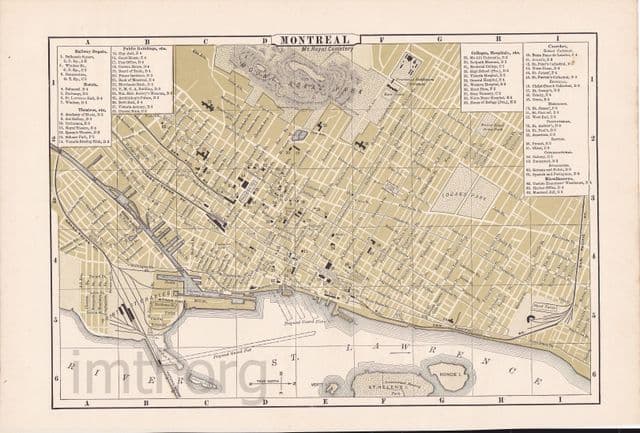
Montreal historical map
The Montreal old map shows evolutions of Montreal city. This historical map of Montreal will allow you to travel in the past and in the history of Montreal in Quebec - Canada. The Montreal ancient map is downloadable in PDF, printable and free.
The Saint Lawrence Iroquoians, a people distinct from the Iroquois nations of the Haudenosaunee then based in present-day New York, established the village of Hochelaga at the foot of Mount Royal centuries before the French arrived as you can see in Montreal historical map. Archeologists have found evidence of their habitation there and at other locations in the historical valley since at least the 14th century. The French explorer Jacques Cartier visited Hochelaga on October 2, 1535, and estimated the population of the native people at Hochelaga to be “over a thousand people”. Seventy years later, the French explorer Samuel de Champlain reported that the St. Lawrence Iroquoians and their settlements had disappeared altogether from the St. Lawrence valley, possibly due to outmigration, epidemic of European diseases, or intertribal wars.
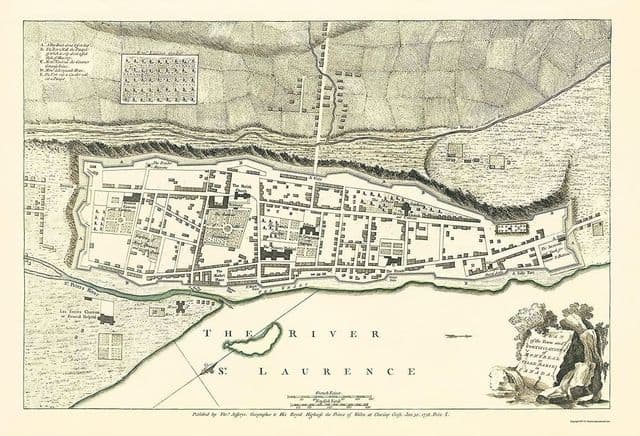
Montreal vintage map
The Montreal vintage map give a unique insight into the history and evolution of Montreal city. This vintage map of Montreal with its antique style will allow you to travel in the past of Montreal in Quebec - Canada. The Montreal vintage map is downloadable in PDF, printable and free.
After World War I, the Prohibition movement in the United States led to Montreal becoming a destination for Americans looking for alcohol. Unemployment remained high in the vintage city, and was exacerbated by the Stock Market Crash of 1929 and the Great Depression. During World War II, Mayor Camillien Houde protested against conscription and urged Montrealers to disobey the federal government registry of all men and women. The government at Ottawa was furious over Houde stand and held him at a prison camp until 1944 as you can see in Montreal vintage map. That year the government decided to institute conscription to be able to expand the armed forces. (see Conscription Crisis of 1944). By 1951, Montreal population had surpassed one million people. The Saint Lawrence Seaway opened in 1959, allowing vessels to bypass Montreal. In time this development led to the end of the city economic dominance as businesses moved to other areas. During the 1960s there was continued growth, including the World Fair known as Expo 67, and the construction of Canada tallest skyscrapers, new expressways and the subway system known as the Montreal Metro.